
Hi there, I’m Sean, and welcome to Turning Stitches! We help woodturners learn the craft to begin making fun projects faster.
You do not need a whole rack of expensive tools to start turning bowls. But when you begin shopping, it can certainly feel that way. Bowl gouges, spindle gouges, scrapers, skews, carbide tools—the choices add up quickly.
Before you fill your tool rack, let’s look at the three tools I focus on in this lesson: a bowl gouge, a carbide cutter or bowl scraper, and a scroll chuck. They cover shaping, refining, and holding your bowl. This assumes you already have a suitable lathe and the rest of your basic turning setup.
Prefer to watch? In this video, I introduce the three critical tools you need to start turning wood bowls at your lathe.
1. The Bowl Gouge Is Your Workhorse
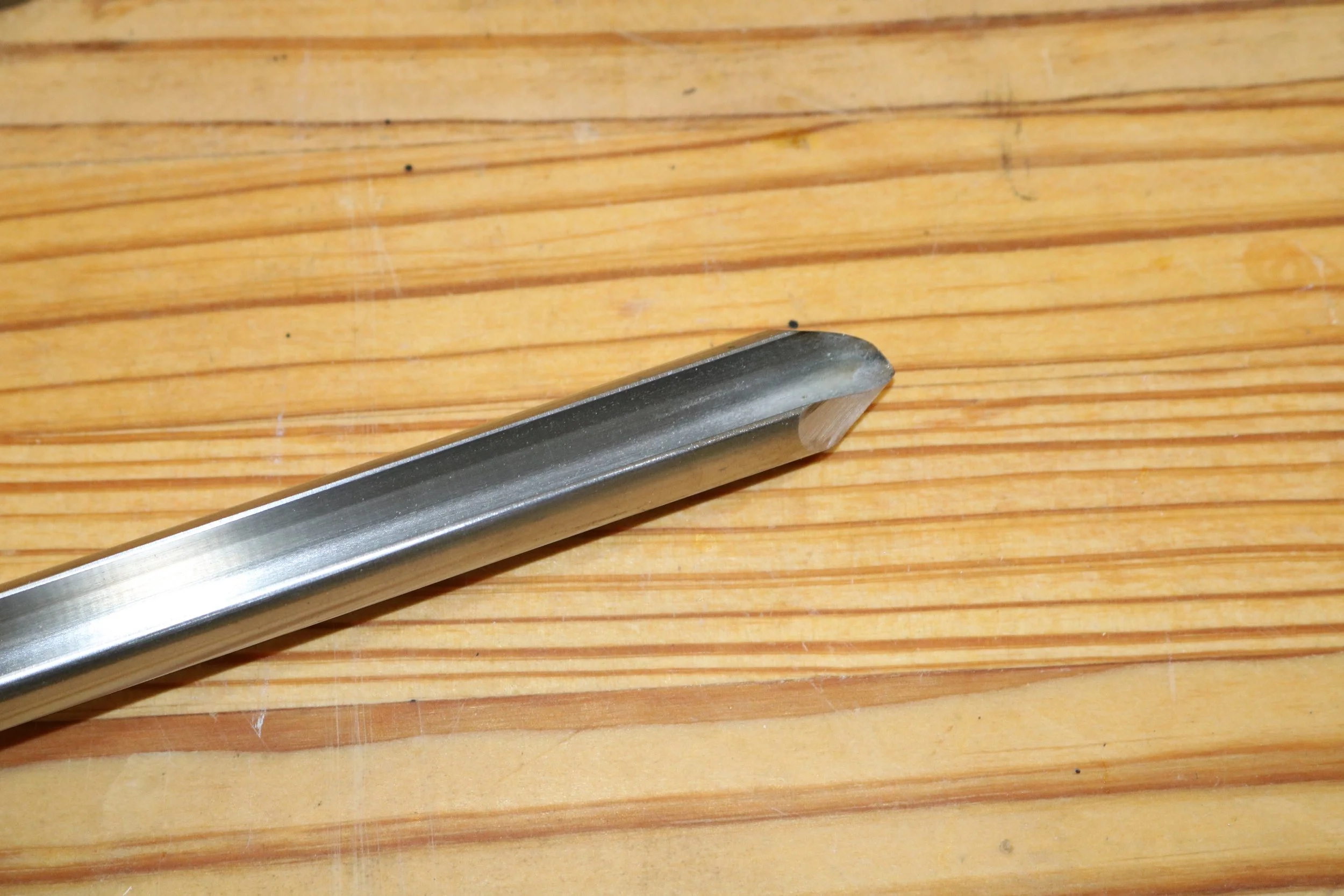
Bowl gouge showing its deep flute and shaped cutting edge.
If I had to choose one cutting tool to turn a bowl from start to finish, I would choose the bowl gouge. It’s my favorite because it can do so much of the work.
You can use it to rough out the blank, shape the outside profile, refine curves, and hollow the interior. As you learn how it cuts, the whole bowl-turning process starts making more sense.
The deep flute and angled grind may look intimidating at first. But this tool is designed for bowl turning. The challenge is learning how to present the cutting edge, support the cut with the bevel, and move the tool through the shape you’re creating.
Those skills make more difference than adding another gouge to the rack. Start by getting comfortable with one bowl gouge and understanding what it can do. Remember that a traditional gouge also needs sharpening; keeping the edge ready is part of learning to use it.
2. Use a Carbide Cutter or Bowl Scraper for Refining
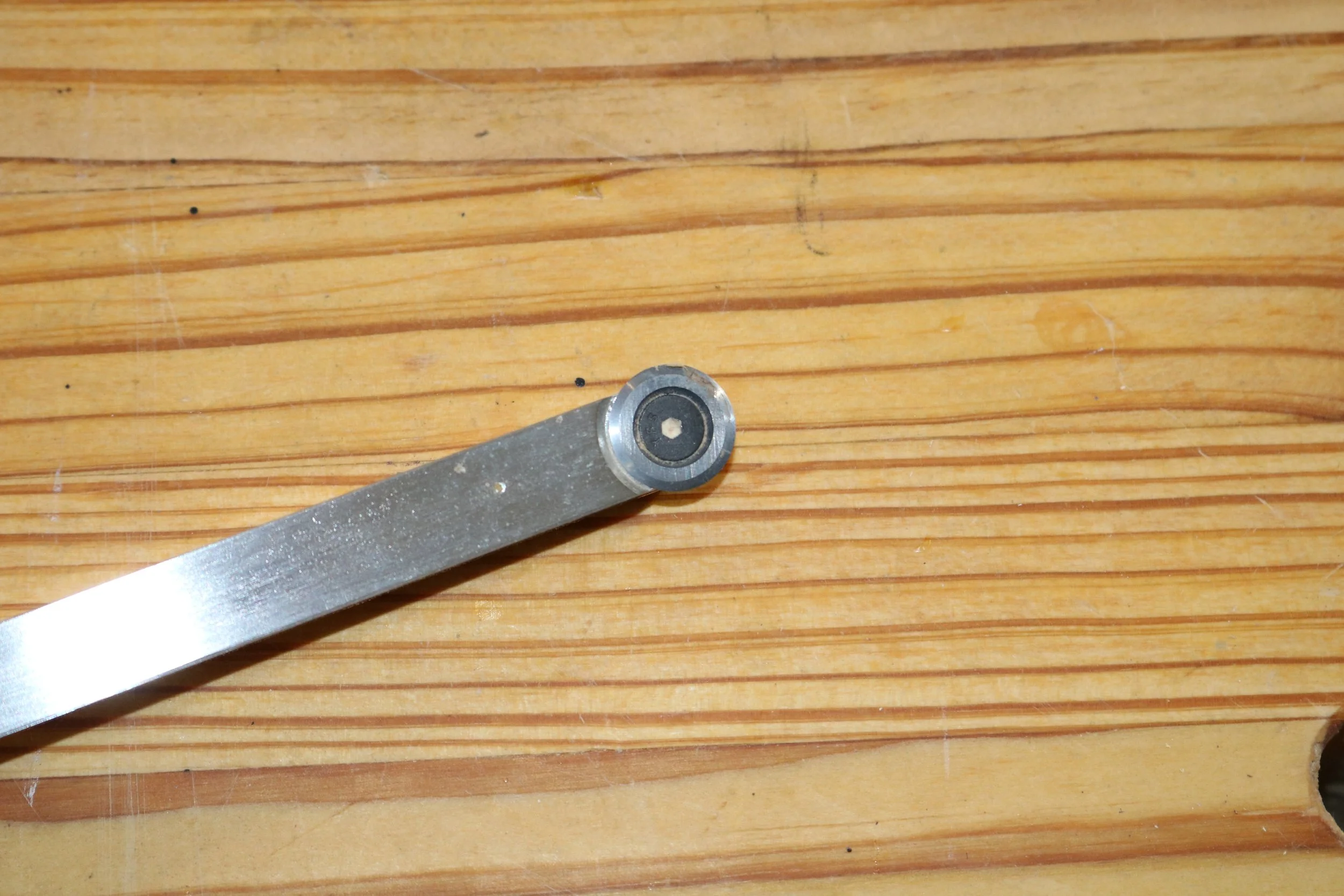
Carbide woodturning tool with a replaceable round cutter
If sharpening feels like a barrier, carbide tools can be a comfortable place to start. They use a replaceable cutter rather than an edge you sharpen at the grinder.
When a cutter becomes dull, you can rotate it to an unused edge, where the cutter design allows, and eventually replace it. That lets you spend more time learning how the wood behaves without first mastering gouge sharpening.
Many traditional carbide turning tools are designed to be held flat on the tool rest. Follow the instructions for your particular tool: carbide still requires proper support, presentation, and control. It doesn’t remove the need to learn turning technique.
In my shop, you’ll usually see me using a bowl scraper instead. It fills a similar role in this lesson, helping me refine the surface and smooth areas after shaping. A steel scraper still needs sharpening, so it does not offer the same sharpening convenience as a replaceable carbide cutter.
A carbide cutter or scraper can help you build confidence, but neither replaces every cut a bowl gouge can make. A well-executed gouge cut can leave a cleaner surface. As your skills grow, you’ll learn when each tool gives you the result you want.
You don’t need to buy both options just to follow this lesson. Choose the approach that suits your current skills, then build from there.
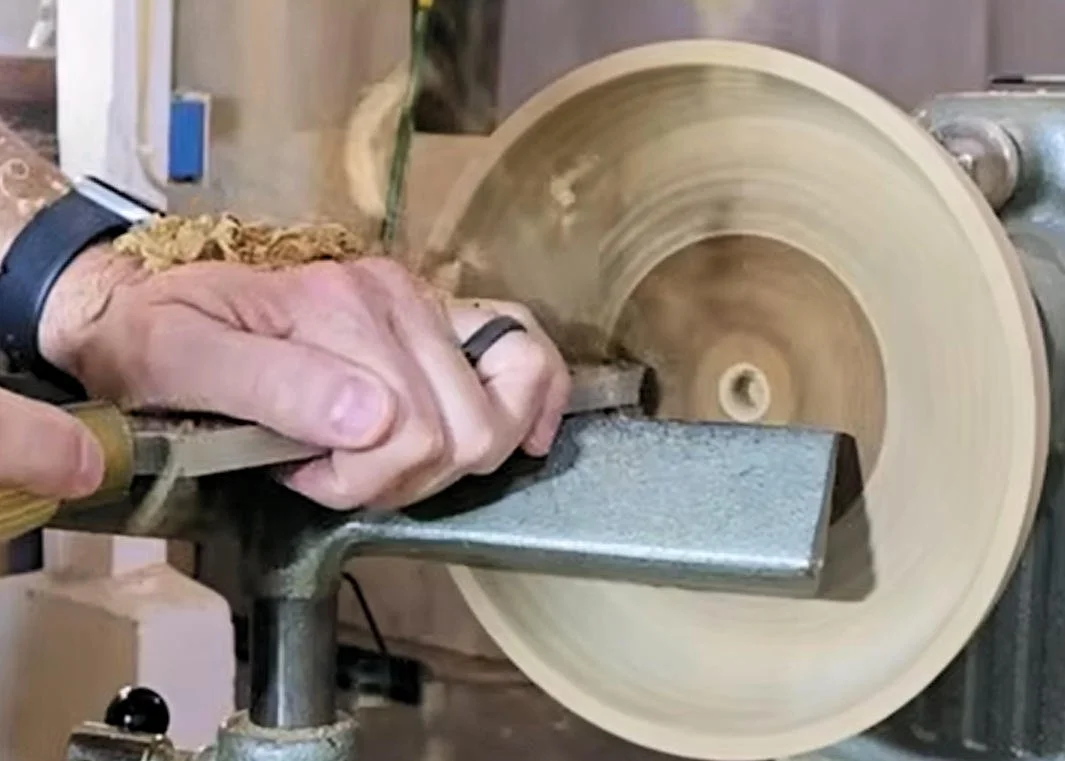
Bowl scraper refining the inside surface of a wood bowl.
3. A Scroll Chuck Holds the Bowl
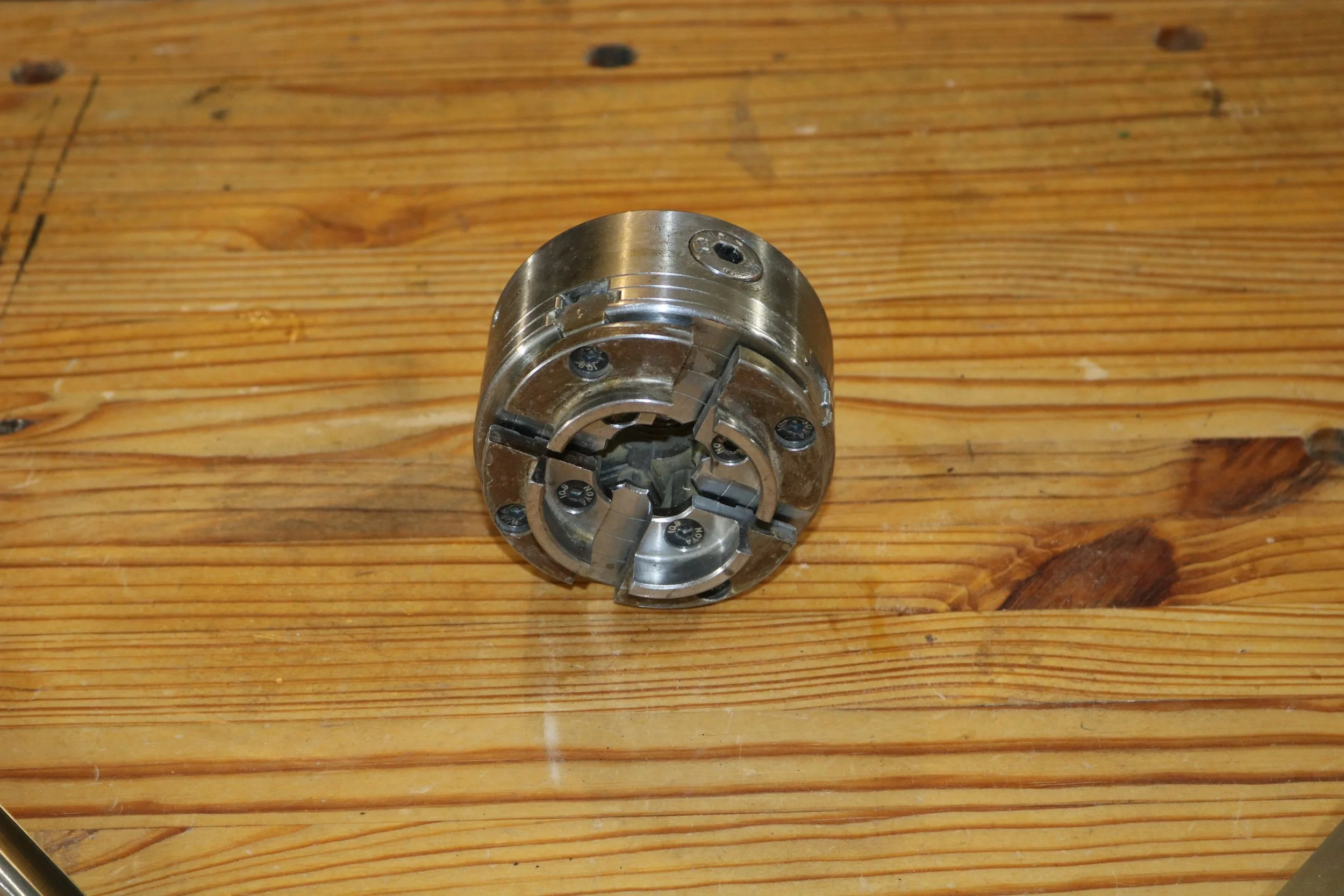
Four Jaw Scroll Chuck
The third tool isn’t a cutting tool. A scroll chuck holds the workpiece while you turn it, and it makes repositioning the bowl much more convenient.
You’ll typically start a bowl blank on a faceplate or between centers. While shaping the outside, you form a tenon or recess that matches your chuck jaws. You can then reverse the bowl and hold it in the chuck to hollow the inside.
That’s where the chuck earns its place in this small setup. It gives you access to the interior while holding the bowl at its base.
The quality of that hold depends on the mounting. The tenon or recess needs to fit the jaws correctly, and the chuck must suit your lathe. Simply owning a chuck won’t make an unsuitable mounting secure.
If you’d like more help with blank selection, mounting, and starting speed, our previous Learnin’ Turnin’ post, How to Mount a Bowl Blank, is a good next read.
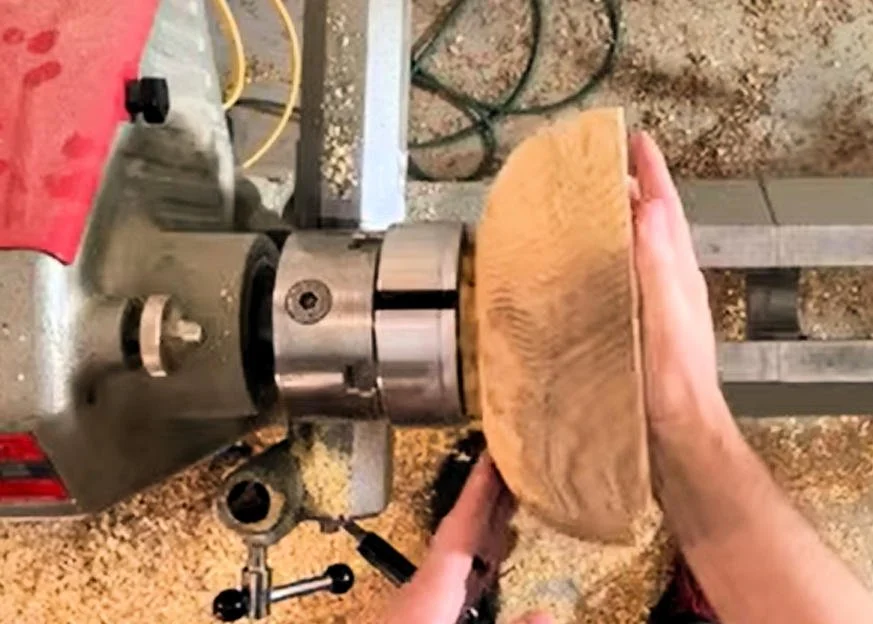
Scroll chuck holding a wood bowl by its tenon.
Put the Three Tools to Work
Think of this as a small starting system: the bowl gouge does the main shaping and hollowing, the carbide cutter or scraper helps refine the surface, and the scroll chuck holds the bowl for the next stage.
You can expand your tool collection later when a project gives you a reason to. For now, learning how these tools work together will take you further than buying every tool you see.
Keep Turning
Our free bowl-turning lessons walk through the process step by step. And if you’re ready for a more structured learning path, the complete Bowl Turning Course here on our website covers choosing and mounting your blank, rough turning, shaping, sanding, and finishing.
Start with a few useful tools, give yourself time to learn them, and keep making bowls. Until next time, happy turning!