
Hi there, I’m Sean, and welcome to Turning Stitches! We help woodturners learn the craft to begin making fun projects faster.
If you’ve ever had a bowl gouge catch, you know it can get your attention in a hurry. The tool grabs, the cut goes wrong, and suddenly bowl turning feels a lot more intimidating than it did a moment ago.
It’s easy to chalk that up to bad luck—or wonder whether bowl turning is for you. But catches happen for a reason. In this lesson, we’ll look at three common mistakes: opening the flute too far, losing bevel contact, and cutting too aggressively.
Prefer to watch? In this video, I introduce my process to remove tear out for a great finished surface everytime.
Understand What the Cutting Edge Is Doing
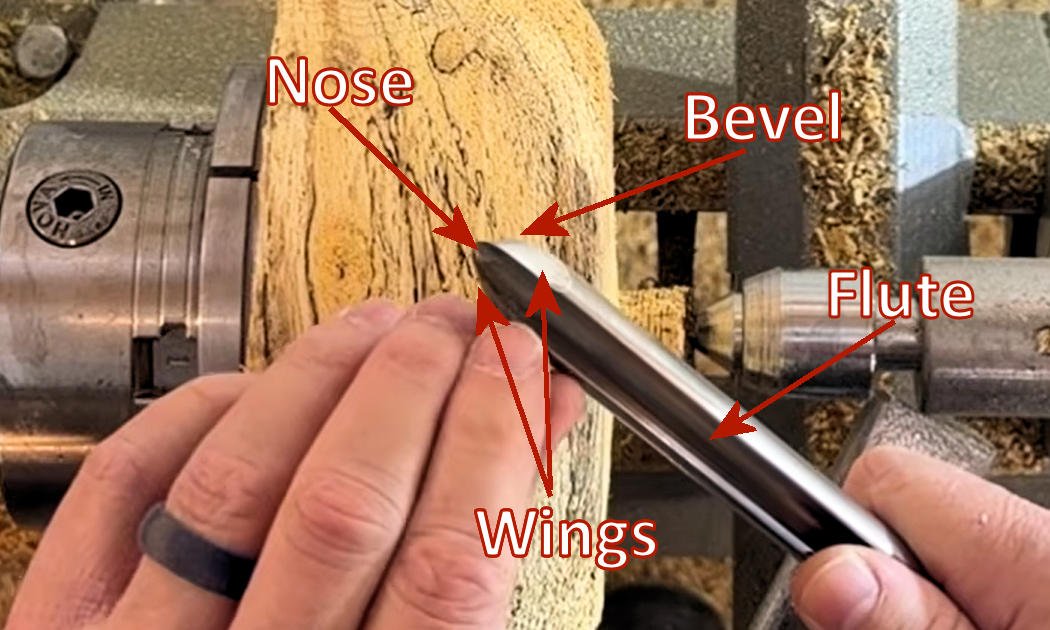
Bowl gouge showing the flute, cutting edge, and bevel.
Start with the lathe switched off and look at your bowl gouge. The flute is the channel running along the top. The cutting edge follows the shaped end of that flute, around the nose and along the wings.
In the demonstration, the trouble begins when too much cutting edge engages at once. Instead of making a controlled cut, another part of the edge bites into the wood and the tool grabs.
That makes flute position, bevel support, and the size of the cut useful things to watch. They work together, so a change in one can quickly affect the others.
1. Opening the Flute Too Far
Rotating the gouge changes how its edge meets the wood. In the roughing cut shown in the video, opening the flute too far lets two parts of the edge engage at the same time. That produces the catch.
For that cut, I begin with the flute mostly closed and establish bevel support. Then I open it only enough to make the cut I want. A small rotation can make the tool much more aggressive, so I’m paying attention to how much edge is working.
The point isn’t to memorize one flute position for every bowl cut. Different cuts call for different presentations. It’s to understand which part of the edge is cutting and avoid rolling another part into the wood unintentionally.
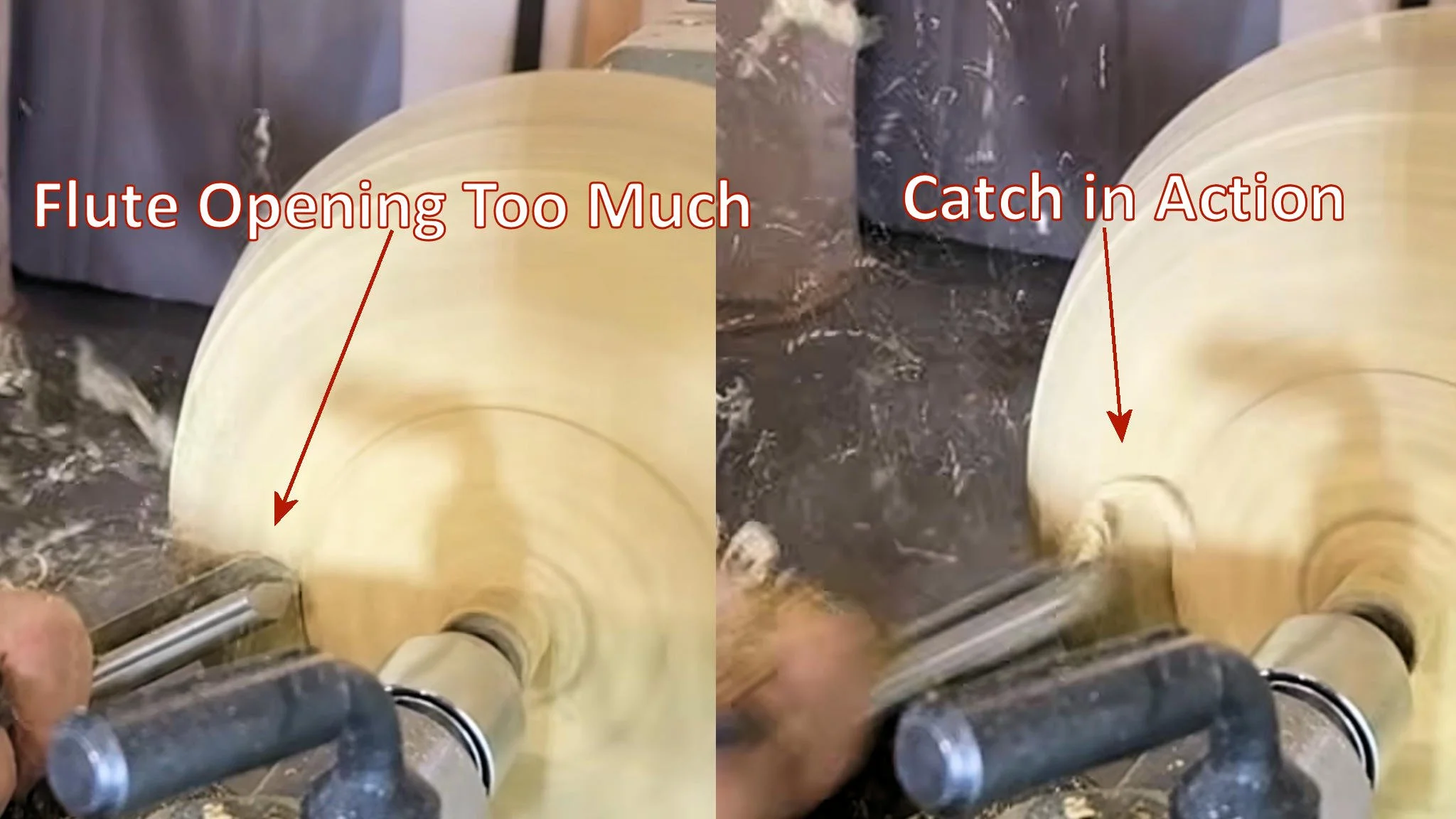
Bowl Gouge roughing cut with the flute opening and fairly aggressively cutting, prompting a catch with the gouge.
2. Losing Bevel Contact and Forcing the Cut
This is one I run into personally, especially while rough turning. The bevel helps support and guide the gouge during a bevel-supported cut. If I lose that contact and keep forcing the tool forward, the edge can suddenly bite more deeply than I intended.
An uneven blank makes this easier to encounter. In the video, the bowl is still rough and has a bark inclusion. The tool can move from wood into a gap or an interrupted area, and the support changes.
When that happens, don’t try to rescue the cut by pushing harder. Ease out and reset the presentation. Re-establish a controlled cut instead of continuing to drive the edge into the surface.
A gap in the wood isn’t an invitation to advance the tool farther. Think about what will happen when solid wood comes around again.
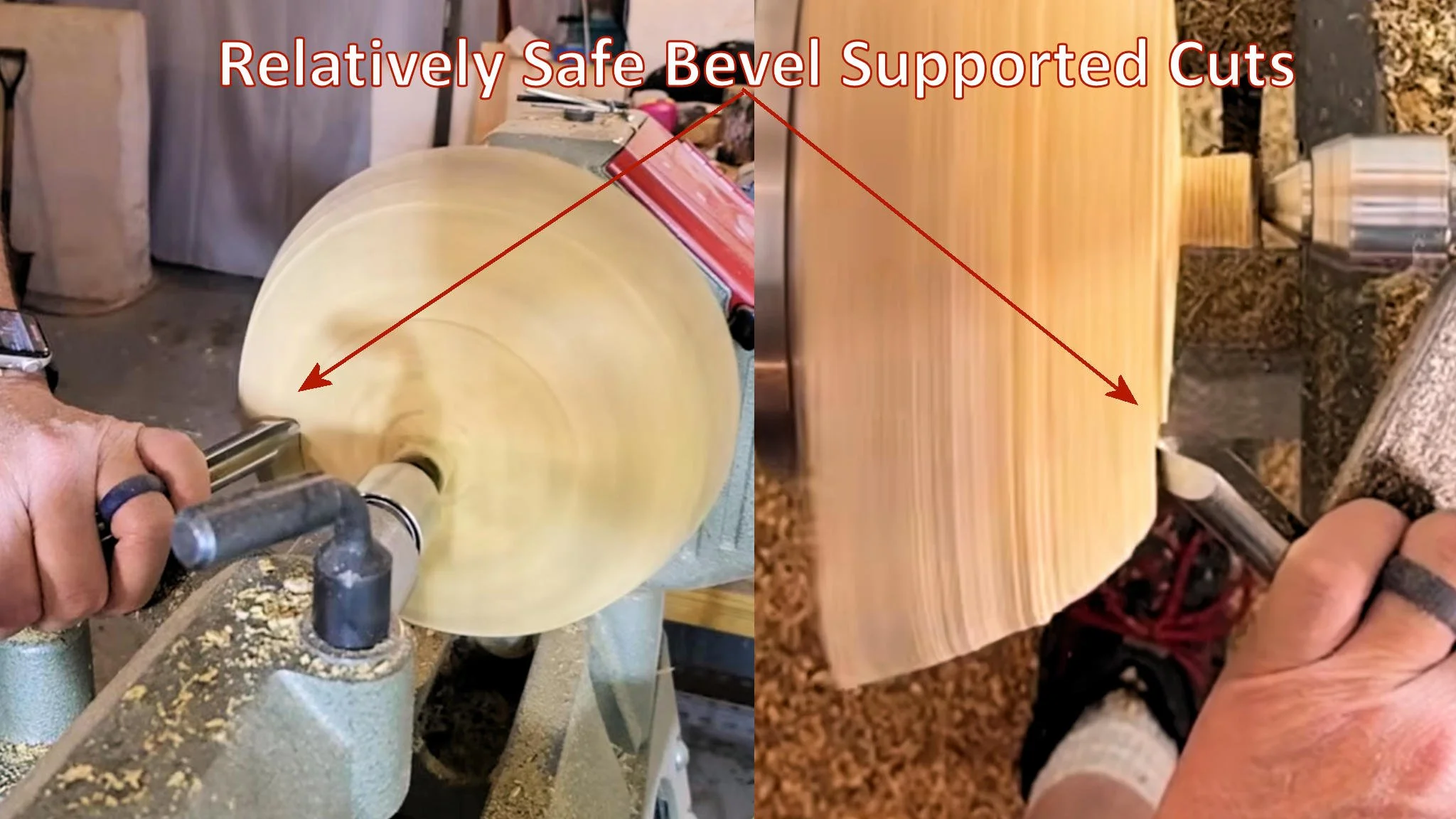
Bowl gouge flute positions illustrating controlled bevel supported roughing cut.
3. Taking Too Aggressive a Cut
Sometimes the problem is simply asking the gouge to remove too much wood at once. If I’m pushing hard and then lose contact, that same pressure can drive the tool into a much larger bite when contact returns.
That’s why aggression and lost bevel support often show up together. The cut may feel manageable until the surface changes, and then the tool grabs.
Back off and take a smaller, controlled cut. As you rough the blank, focus on how the tool is behaving rather than how quickly the wood is coming off. If the cut stops feeling controlled, reset it.
Three Questions to Ask After a Catch
Stop the lathe and check the workpiece and mounting before continuing. Then think back to what changed just before the tool grabbed:
Was my flute too far open, allowing more edge to engage than I intended?
Did I lose bevel contact and keep pushing?
Was I taking too large or aggressive a cut?
These questions won’t explain every possible catch, but they give you a useful starting point. Understanding the cause helps you change the next cut instead of repeating the same mistake.
Keep Turning
With careful practice, you’ll get better at recognizing a supported cut, controlling flute rotation, and noticing when the tool needs to be reset. Experience can help reduce catches, but control still deserves your attention on every bowl.
Our free bowl-turning lessons help you build those skills step by step. For a more structured path, the complete Bowl Turning Course takes you from mounting your first blank to making cleaner, more confident cuts.
Until next time, happy turning!